A Broken Mirror: How India Mistook Unstable Asymmetry with Bangladesh for Stability
This essay examines why the India-Bangladesh relationship, which New Delhi regarded as stable and deeply aligned until August 2024, broke down so completely and so quickly. Drawing on Brantly Womack’s […]
Korea Chair Bulletin: August-September 2026
The Korea Chair Bulletin provides research-driven insights into India-South Korea relations, covering policy shifts, strategic dialogues, and emerging trends. It also highlights key developments and news from the Korean Peninsula.
Australia-India Anti-Submarine Warfare (ASW) Cooperation: Doctrine, Capabilities, Constraints, and Strategic Futures
This report examines Australia–India anti-submarine warfare (ASW) cooperation within an increasingly contested Indo-Pacific undersea environment. It argues that meaningful, campaign-level cooperation is both achievable and strategically valuable without requiring alliance-style integration or the sharing of highly sensitive sensor architectures. Cooperation is best structured around aligned doctrine, greater intelligence sharing, and routine operational coordination that builds the enduring relationships between the two operational-level headquarters.
The Illusion of Technology Transfer: The Missing Ingredients of India’s Defense Industrialization
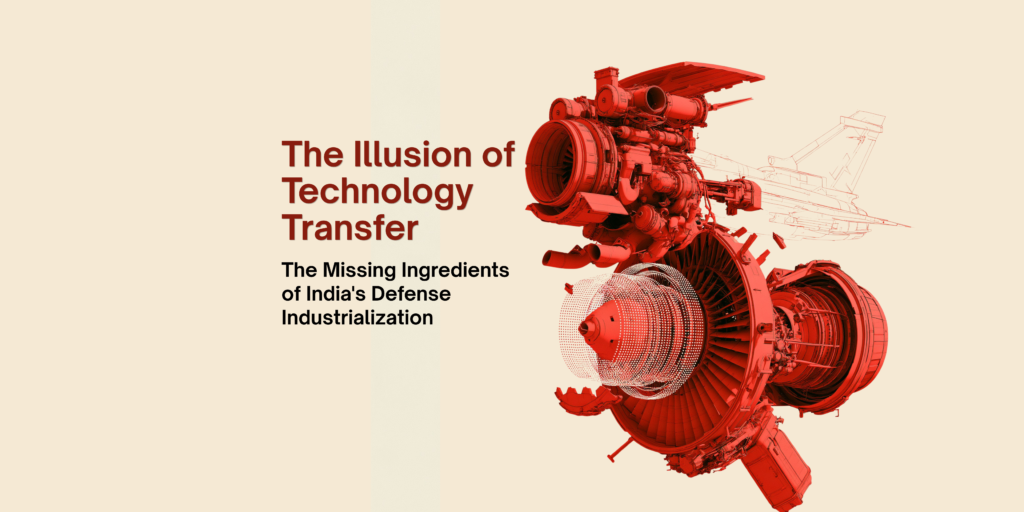
India has built foreign-designed weapons under license for six decades without acquiring design authority. This report explains why: procurement treats technology transfer as a contractual deliverable, but absorption cannot be contracted for. It sets out a ladder of technological depth and a five-stage chain, then scores four programs against them.
Beyond Shipbuilding: Building a Maritime Industrial Partnership between India and South Korea
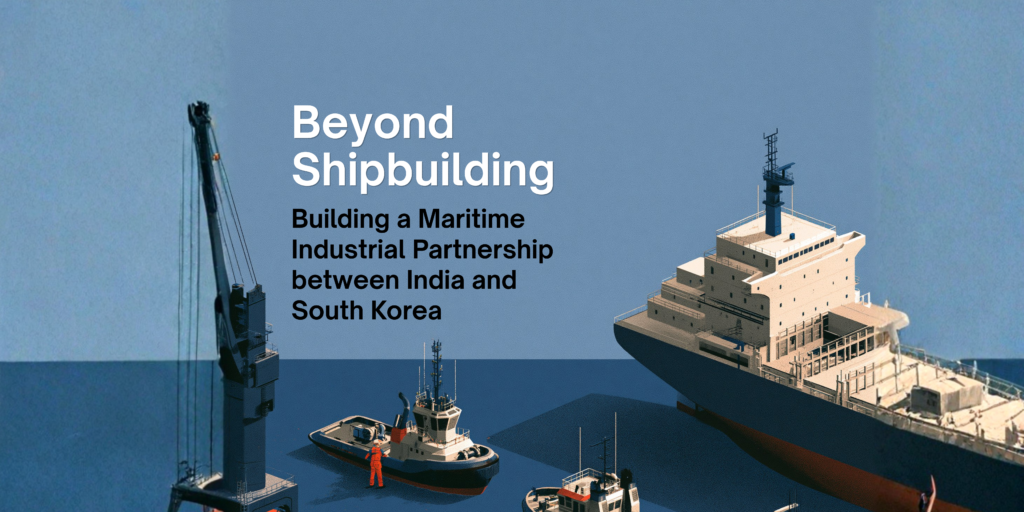
This report analyzes the structural asymmetry between the Indian and South Korean shipbuilding industries and the case for converting it into a durable industrial partnership. Indian scale, demand, and demography align with Korean technology, production systems, and institutional depth, and the complementarity is strong enough to support a relationship that goes beyond a commercial transaction.
Korea Chair Bulletin: July-August 2026
The Korea Chair Bulletin provides research-driven insights into India-South Korea relations, covering policy shifts, strategic dialogues, and emerging trends. It also highlights key developments and news from the Korean Peninsula.