Tapping into the Momentum: The EU-India Trade and Technology Council

This analysis explores the EU-India Trade and Technology Council (TTC), a key mechanism for deepening the strategic relationship between the European Union and India amidst shifting global dynamics. It highlights areas of shared interest, including strengthening semiconductor ecosystems, promoting trustworthy AI, and fostering collaboration in clean and green technologies, often seeking to reduce reliance on other dominant global powers.
Operation Sindoor: A Timeline
This report chronicles the April-May 2025 India-Pakistan conflict sparked by a terrorist attack in Pahalgam. It details escalating military exchanges featuring drone warfare and precision strikes, while tracking diplomatic interventions. The confrontation demonstrated conventional warfare under nuclear shadow before ending with a May 10 ceasefire.
Korea Chair Bulletin: Mar-Apr 2025
The Korea Chair Bulletin provides research-driven insights into India-South Korea relations, covering policy shifts, strategic dialogues, and emerging trends. It also highlights key developments and news from the Korean Peninsula.
The 2021 India-Pakistan Ceasefire and the Road Ahead

This report analyzes the 2021 India-Pakistan ceasefire that has successfully endured for four years, providing crucial relief to border communities. The study examines differing national interpretations and concludes that sustaining this rare diplomatic success depends on addressing cross-border terrorism and maintaining political commitment from both sides.
Powering India’s Nuclear Sector: SMRs, Reforms & Private Sector Push

This report examines India’s strategic pivot toward nuclear energy through Small Modular Reactors (SMRs) and landmark private sector reforms. The report investigates critical amendments to long-standing nuclear regulations that could unleash unprecedented investment in clean energy infrastructure. Through extensive research, it evaluates how these changes align with India’s Viksit Bharat vision while navigating proliferation concerns, liability frameworks, and public sentiment. With India targeting a tenfold increase in nuclear capacity by 2047, this timely assessment explores how regulatory evolution, international partnerships, and technological innovation could transform the nation’s energy landscape while creating a model for developing economies worldwide.
Preventing Escalation at Sea: Towards an India-Pakistan Naval Agreement
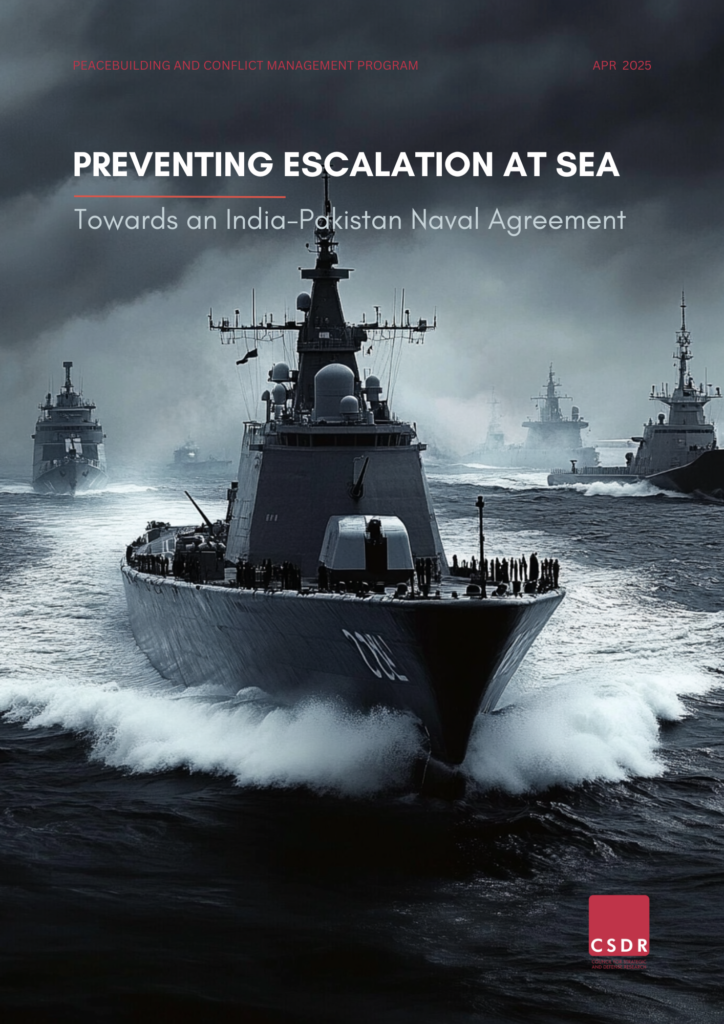
This report analyzes the pressing need for an agreement between the Indian and Pakistani navies to prevent unintended escalation at sea, particularly given their increasing modernization and nuclear capabilities.