
C Raja Mohan writes | India-Europe deal isn’t a byproduct of Trump’s America. It’s been long in the making
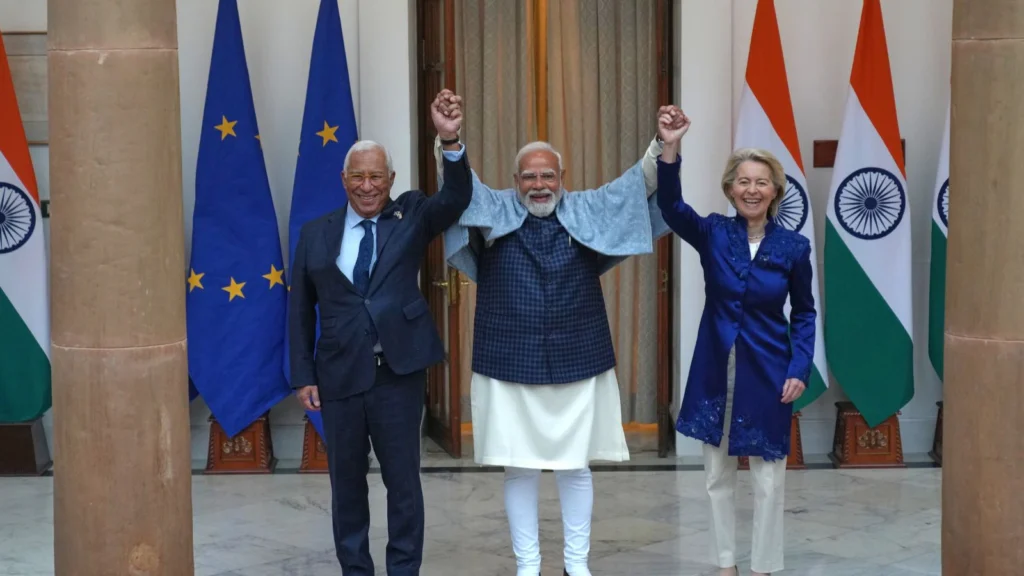
The agreements on trade, defence cooperation, and mobility unveiled this week were not conceived overnight. They reflect a sustained diplomatic effort stretching back to the early years of Prime Minister […]
C Raja Mohan writes: Narendra Modi and Friedrich Merz are looking at ‘Indo-Europe’ to balance America and China
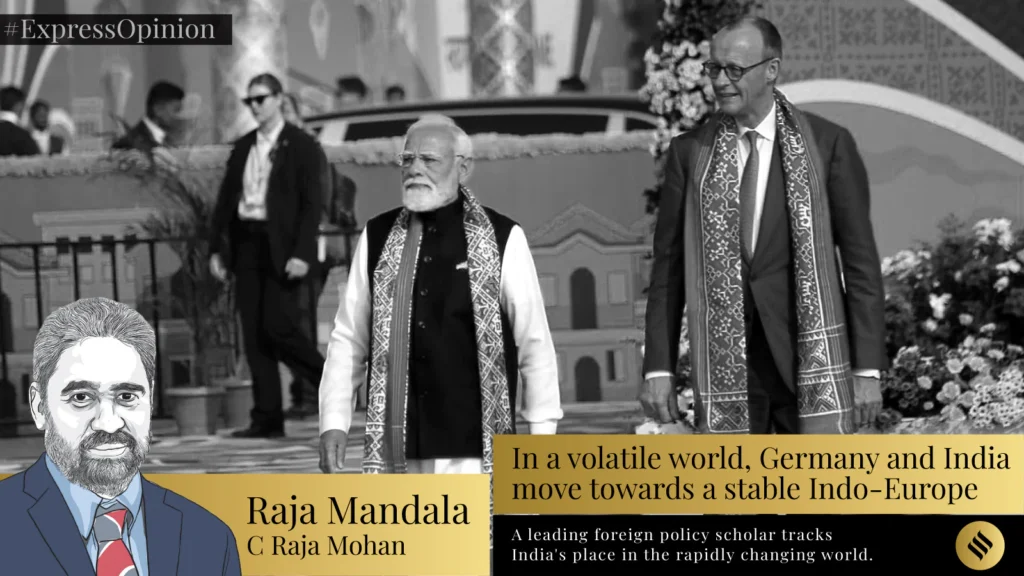
As Europe’s leaders prepare to deepen engagement with India, the challenge will be to give the Indo-European idea concrete meaning. The Modi-Merz talks have taken an important step in that […]
Zeitenwende Meets Atmanirbhar: Co-Creating the Future of Indo-German Defense

Indo-German defense ties are at a strategic inflection point. As Germany embraces Zeitenwende and India pursues Atmanirbhar Bharat, this report argues for shifting from transactional arms sales to deep industrial co-creation. It maps a decade-long strategy (2025–2035) to fuse German engineering with Indian manufacturing scale. Key recommendations include a $50M joint innovation fund, fast-tracked export controls (“Green Lists”), and integrating MSMEs into global supply chains. The goal: a resilient partnership building strategic autonomy for both nations.
Aligned Orbits: Forging a New Era of Indo-German Space Collaboration

This report assesses the Indo-German space partnership, noting that despite historical ties since 1963, the bilateral space relationship has underperformed largely due to ISRO’s monopoly and Germany’s ESA-centric focus. However, a pivotal opportunity has emerged, driven by concurrent major policy shifts in both countries, including a series of Indian reforms (since 2020) to privatize its space sector and Germany’s recently announced $41 billion defense space investment.
Climate Action and Green Economy Opportunities in the EU-India Strategic Partnership

This policy brief highlights how the EU and India can turn climate action and the green economy into a strategic alliance. Priorities include electric mobility, renewable energy co-manufacturing, circular economy, digital infrastructure, and heat-water management. Overcoming trade frictions, regulatory differences, and investment gaps is vital to unlock joint innovation, financing, and global standard-setting.
Securing the Final Frontier: Collaborative Pathways for India and Europe in Space Governance and Security

This policy brief argues that India and Europe must elevate their space cooperation into a structured partnership. Converging interests in connectivity, human spaceflight, security, and governance create opportunities for joint projects and norm-setting. Challenges of trust, regulation, and geopolitical alignments remain, requiring institutionalized dialogue and integrated economic, political, and diplomatic frameworks.