Enhancing Australia-India Underwater Domain Awareness Cooperation in the Indo-Pacific

This scoping report is the first in a series of five and examines the evolving maritime risk environment in the Indo-Pacific, the strategic importance of UDA, and the technological developments shaping it. It highlights UDA as a promising avenue for Australia-India cooperation, building on complementary strengths such as India’s manufacturing scale and Australia’s niche intellectual property and research expertise.
Korea Chair Bulletin: January-February 2026

The Korea Chair Bulletin provides research-driven insights into India-South Korea relations, covering policy shifts, strategic dialogues, and emerging trends. It also highlights key developments and news from the Korean Peninsula.
India’s Approach to Military AI: Strategy, Governance, and Challenges

This report assesses India’s military AI ecosystem, its institutional foundations, operational deployments, and persistent structural constraints, and benchmarks it against the rapid advances of its principal competitors.
Power and Purpose: Indian Foreign Policy 2025
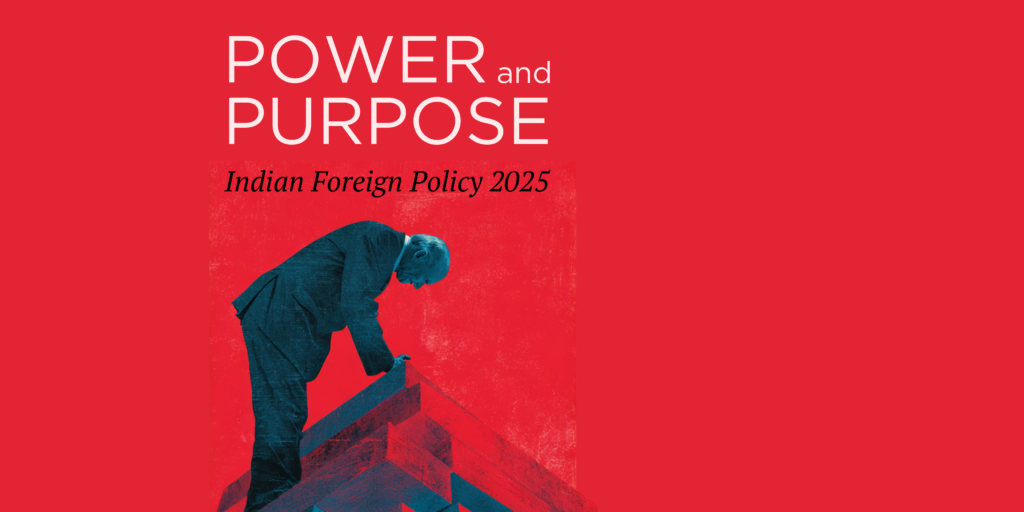
This report examines India’s foreign and security policy amid unprecedented geopolitical volatility in 2025. It analyzes India’s navigation of regional turbulence, recalibration of its technology strategy, defense reforms, and potential for cascading domestic reforms amid a deteriorating strategic environment.
Korea Chair Bulletin: December 2025-January 2026

The Korea Chair Bulletin provides research-driven insights into India-South Korea relations, covering policy shifts, strategic dialogues, and emerging trends. It also highlights key developments and news from the Korean Peninsula.
Nuclear Proliferation Risks in East Asia: Latent Pathways and Explicit Pressures
This essay examines nuclear proliferation risks across East Asia through both overt military programs and latent civilian capabilities.