C Raja Mohan writes: China’s parade, Asia’s divide
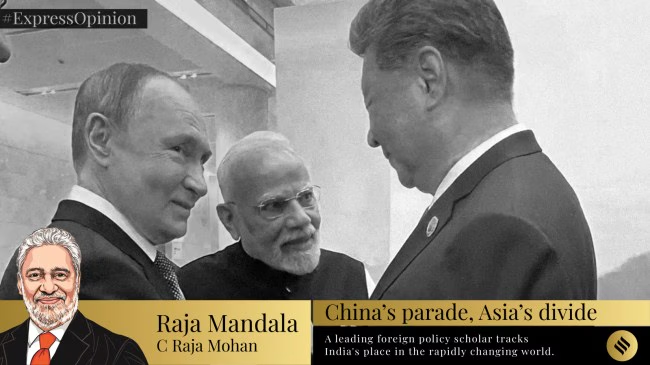
Modi’s decision to skip China’s military pageant days after SCO speaks of impracticality of Eurasian coalition
India–Bangladesh Ties After Hasina
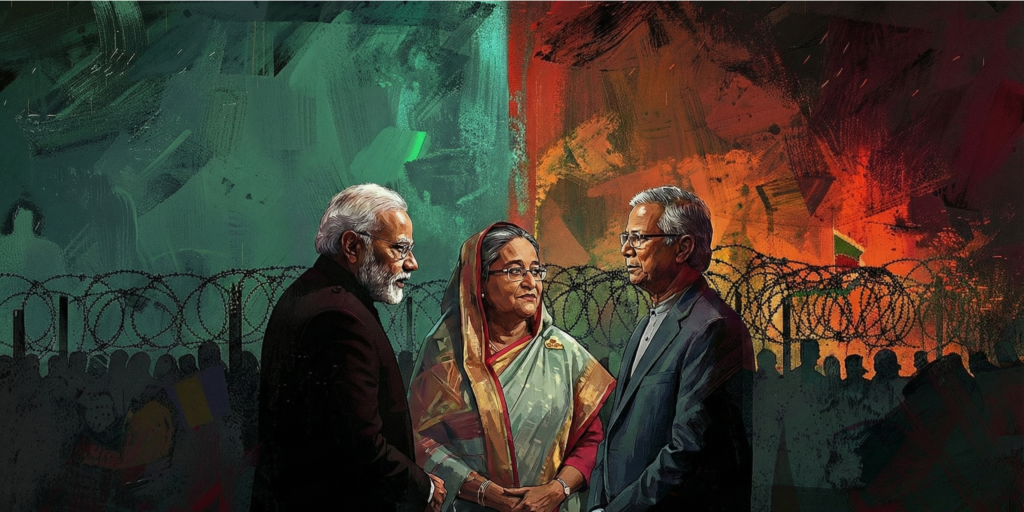
This roundtable discussed the political roots of the recent downturn in India–Bangladesh relations, the implications of Bangladesh’s February 2026 elections, the future of trade and connectivity, Dhaka’s evolving foreign policy choices, and how New Delhi can rebuild trust with Bangladesh’s new leadership and manage the relationship beyond the Sheikh Hasina transition.
Recasting India’s Air Defence Architecture: Countering the Drone and Swarm Threat

This report argues that India’s traditional air defence (AD) architecture—reliant on expensive, centralized missile systems—is becoming obsolete against the proliferating threat of low-cost, autonomous drone swarms. The May 2025 “Operation Sindoor” crisis exposed a critical “cost asymmetry”: expending million-dollar interceptors against disposable $2,000 FPV drones is economically unsustainable, allowing adversaries to easily exhaust India’s magazine depth.
The New Cold War and Changing Regional Orders

The roundtable discussion will examine how shifting geopolitics—from the Trump–Xi accord to Middle Eastern realignments and a possible Russia–Ukraine ceasefire—are reshaping India’s strategic environment. It will assess implications for ASEAN, Gulf energy, IMEC, and how India balances BRICS+ ambitions with practical security and supply-chain partnerships like the Quad.
Aligned Orbits: Forging a New Era of Indo-German Space Collaboration

This report assesses the Indo-German space partnership, noting that despite historical ties since 1963, the bilateral space relationship has underperformed largely due to ISRO’s monopoly and Germany’s ESA-centric focus. However, a pivotal opportunity has emerged, driven by concurrent major policy shifts in both countries, including a series of Indian reforms (since 2020) to privatize its space sector and Germany’s recently announced $41 billion defense space investment.
Decoding the Eastern Sector: India, China, and the McMahon Line

This report provides a comprehensive analysis of the India-China boundary dispute, focusing specifically on the dynamic Eastern Sector (Arunachal Pradesh). It traces the historical and legal origins of the conflict, from the 1914 Simla Convention and the establishment of the McMahon Line to the complex diplomatic negotiations of the post-independence era. The study argues that China’s maximalist claims in the East are less about genuine historical sovereignty and more about strategic leverage—aimed primarily at compelling India to recognize the status quo in Aksai Chin.