From Chips to Ships: Assessing the Modi–Lee Summit and the Road Ahead

This roundtable will discuss the significance of President Lee Jae Myung’s 2026 visit to India and its implications for the India-South Korea partnership. It will examine cooperation in trade, shipbuilding, technology, energy, and defence, assess persistent structural challenges, and explore how both countries can translate summit commitments into sustained strategic outcomes.
Workshop III: Enhancing Australia-India Underwater Domain Awareness Cooperation in the Indo-Pacific

Building on the previous two Australia–India UDA workshops, the Third Workshop in Australia will focus on undersea search and rescue, deep-sea awareness, and industry challenges in operationalising emerging technologies. The programme will also feature a table-top exercise under the project’s first Expert Exchange, supported by DFAT under SATPI.
Fighting on Borrowed Ground: Multi-Domain Operations and the Socio-Technical-Cognitive Battlespace

This report is a follow-up to an earlier study, “Beyond the Kinetic,” by the same authors, which introduced the Socio-Technical-Cognitive Battlespace as a way of understanding modern conflict.
Op Sindoor First Anniversary Assessment: Maritime Reckoning and Future Imperatives
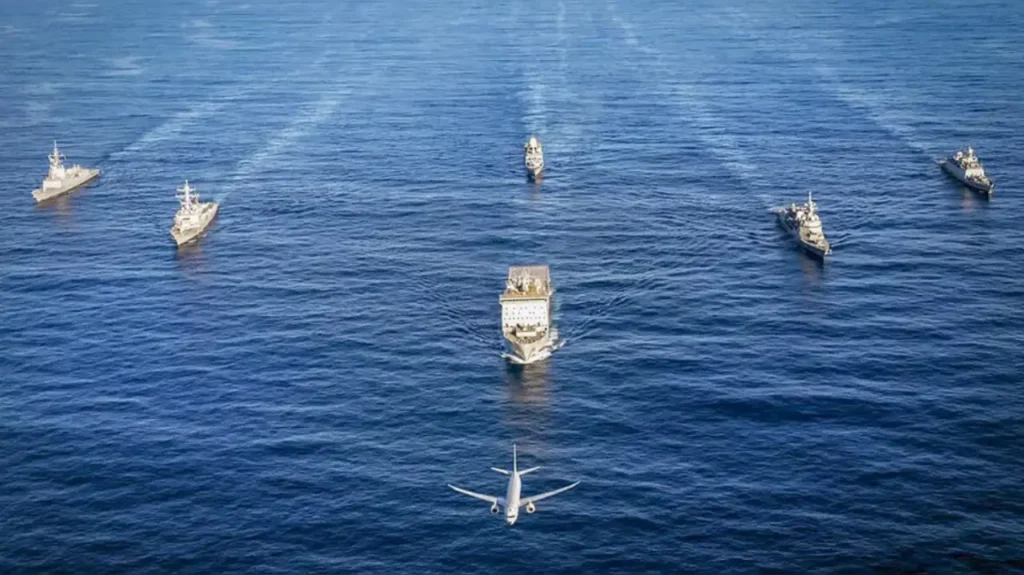
Operation Sindoor transformed India’s military doctrine and showcased the Indian Navy’s significant maritime strength.
India just doesn’t want to go into the real reasons behind wars. It’s our blind spot
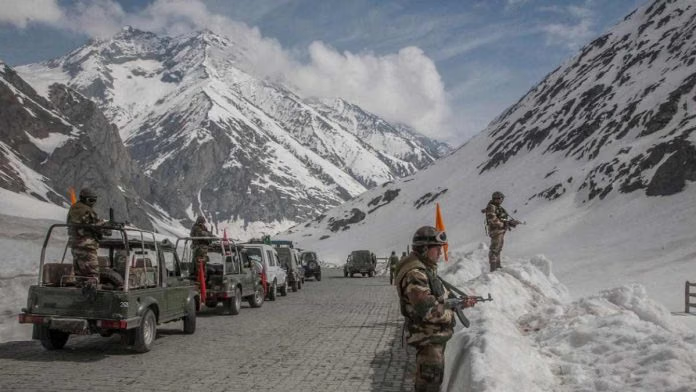
A peculiar feature of the Indian security state is the frequency with which failures to anticipate enemy action are explained away as ‘intelligence gaps or failures’.
C Raja Mohan writes: In a shifting world order, five principles should guide India’s diplomacy

The lesson is straightforward. In foreign policy, there is no substitute for nurturing trusted partnerships even while seeking new opportunities