The Quiet Corridor: The Case for Deepening India-Canada Pharmaceutical Trade
This report makes the case for deepening India-Canada trade in finished pharmaceutical products and for institutionalizing it under the CEPA negotiations now targeted for conclusion by the end of 2026.
From Trade to Strategic Partnership: Agriculture and the India–Canada CEPA
This report makes the case for treating agriculture as the anchor of the India-Canada economic reset, and for institutionalizing it under the CEPA negotiations now targeted for conclusion by the end of 2026.
Unlocking the Puzzle in India-Australia Defence-Industrial Cooperation
Drawing on verified procurement records, budget documents and industry data from both countries, the report identifies near-term matches between documented Indian requirements and established Australian capabilities, six medium-term areas of shared technological priority, and the structural obstacles standing between them. It closes with seven initiatives with indicative costs, most of which require no direct expenditure.
Korea Chair Bulletin: June-July 2026
The Korea Chair Bulletin provides research-driven insights into India-South Korea relations, covering policy shifts, strategic dialogues, and emerging trends. It also highlights key developments and news from the Korean Peninsula.
The Clean Energy Race in South Asia: India, China, and the Boundaries of Delivery
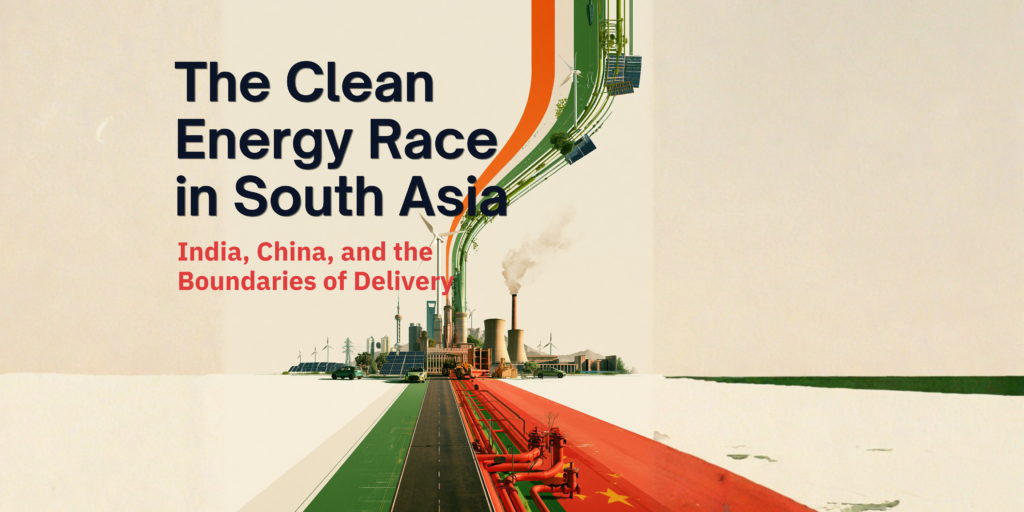
As India and China compete to power South Asia’s energy transition, the decisive factor is not who has more capital. It is who can deliver. This report argues that the two countries’ delivery models, not their resources, explain the diverging outcomes across Bhutan, Nepal, and Bangladesh. India’s approach is relationship-intensive and conditional, built on sovereign Lines of Credit negotiated case by case. China’s is capital-intensive and vertically integrated, with state-owned enterprises controlling financing, engineering, and equipment supply from start to finish.
After the Crisis: Three Futures for India and Pakistan
This is the closing report in the series, and it turns from what has happened to what comes next. It asks where the India-Pakistan relationship is heading a year after the April-May 2025 crisis, now that the relationship has been stripped to almost nothing, with no trade, a suspended Indus Waters Treaty, downgraded missions, and severed people-to-people ties.